How to Handle Separation Anxiety When Your Child Starts Preschool
Starting preschool is an exciting milestone for both children and parents. It is a time when children begin exploring new environments, meeting teachers and friends, and developing greater independence. However, the first few days can also bring separation anxiety, making the transition difficult for some children.
Crying at drop-off, refusing to enter the classroom, holding on tightly to parents, or repeatedly asking when they will come back are common reactions. While these behaviours can be emotional for parents, separation anxiety is often a normal part of early childhood development.
The good news is that with patience, consistency, and the right support, children can gradually become comfortable with their new routine.
What Is Separation Anxiety?
Separation anxiety occurs when a child feels worried, upset, or fearful when separated from their parents or primary caregiver.
For a young child, preschool may be their first regular experience away from home. They are suddenly entering an unfamiliar environment with new people, routines, sounds, and activities. It can take time for them to understand that their parents will leave but will also return.
Some common signs include:
- Crying or becoming upset during drop-off
- Refusing to enter the classroom
- Clinging to parents
- Asking parents not to leave
- Complaining of stomach aches or feeling unwell
- Becoming unusually quiet or withdrawn
- Difficulty sleeping before preschool
- Repeatedly asking when parents will return
Understanding these reactions can help parents respond calmly rather than becoming worried or frustrated.
Why Do Children Experience Separation Anxiety?
Every child is different, but several factors can contribute to separation anxiety.
A child may feel anxious because preschool is a completely new environment. They may not yet know their teacher, understand the daily routine, or have friends they feel comfortable with.
Changes at home can also affect a child’s emotional security. Moving to a new home, welcoming a new sibling, changing caregivers, or experiencing a change in routine may make separation more difficult.
Sometimes, children simply need more time to develop confidence and independence.
1. Talk About Preschool Before the First Day
Preparation can make the transition easier.
Talk positively about preschool several days or weeks before your child’s first day. Explain what they can expect in simple language.
You could say:
“You will meet your teacher, play with your friends, have fun activities, and I will come back to pick you up.”
Avoid making preschool sound like a punishment or using phrases that may increase fear.
Instead of saying, “Don’t cry when I leave,” try saying, “I know you may miss me, but you will be safe and I will come back.”
2. Establish a Consistent Morning Routine
Children feel more secure when they know what is going to happen next.
Create a simple morning routine that remains consistent:
Wake up → Get ready → Have breakfast → Pack the bag → Travel to preschool → Say goodbye
Try to avoid rushing in the morning. Giving your child enough time to get ready can reduce unnecessary stress before leaving home.
A predictable routine helps children understand that preschool is simply another part of their day.
3. Practice Short Separations at Home
Before preschool begins, gradually introduce short periods away from your child.
You might leave your child with a trusted family member while you go somewhere for a short time. Then gradually increase the duration.
This gives your child an opportunity to learn an important lesson:
“My parent leaves, but my parent always comes back.”
Repeated experiences can help build trust and confidence.
4. Create a Simple Goodbye Ritual
Long and emotional goodbyes can sometimes make separation more difficult.
Instead, create a short and predictable goodbye ritual.
For example:
Hug → Say goodbye → Reassure your child → Leave
You could say:
“Have a wonderful day. I love you. Your teacher will take care of you, and I will see you after school.”
Try to avoid repeatedly returning after saying goodbye, as this can make the separation harder.
5. Stay Calm and Confident
Children often notice their parents’ emotions.
If parents appear extremely worried or nervous about leaving, children may interpret this as a sign that preschool is unsafe.
Even if you feel emotional, try to remain calm and reassuring.
Your confidence communicates:
“You are safe. I trust your teacher. You can do this.”
This can make a significant difference in how your child approaches the new environment.
6. Help Your Child Build a Relationship With the Teacher
A familiar and trusted teacher can make preschool feel more comfortable.
Encourage your child to interact with their teacher and participate in activities. A warm relationship with the teacher can give children an additional source of comfort when their parents are not around.
First Step focuses on parent-teacher interaction as part of its learning environment, helping create communication between educators and families.
7. Focus on the Positive Parts of Preschool
Talk about the enjoyable things your child can experience.
Ask questions such as:
- “What did you enjoy today?”
- “Which activity did you like?”
- “Did you play with anyone?”
- “What was your favourite part of the day?”
Instead of focusing only on whether your child cried, encourage them to talk about what they enjoyed and discovered.
This gradually changes their association with preschool from “I have to leave my parents” to “I get to learn and play.”
8. Give Your Child Time to Adjust
Every child adapts at a different pace.
Some children become comfortable within a few days, while others may need several weeks. Avoid comparing your child with another child who adjusts faster.
The goal is not to eliminate every emotional reaction immediately. The goal is to gradually help your child develop confidence, independence, and trust.
9. Consider a Preschool With Daycare When Your Family Needs Extended Care
For working parents, finding a setting that combines early education with reliable childcare can make daily routines easier.
A Preschool with Daycare can provide children with continuity between their learning and childcare environment. Instead of adjusting to completely different places and caregivers, children can become familiar with one environment and routine.
When evaluating a preschool with daycare, parents should consider:
- Safety and supervision
- Teacher and caregiver experience
- Child-to-adult ratio
- Daily routine
- Learning activities
- Nutrition and meal arrangements
- Rest and activity periods
- Communication with parents
- Hygiene and cleanliness
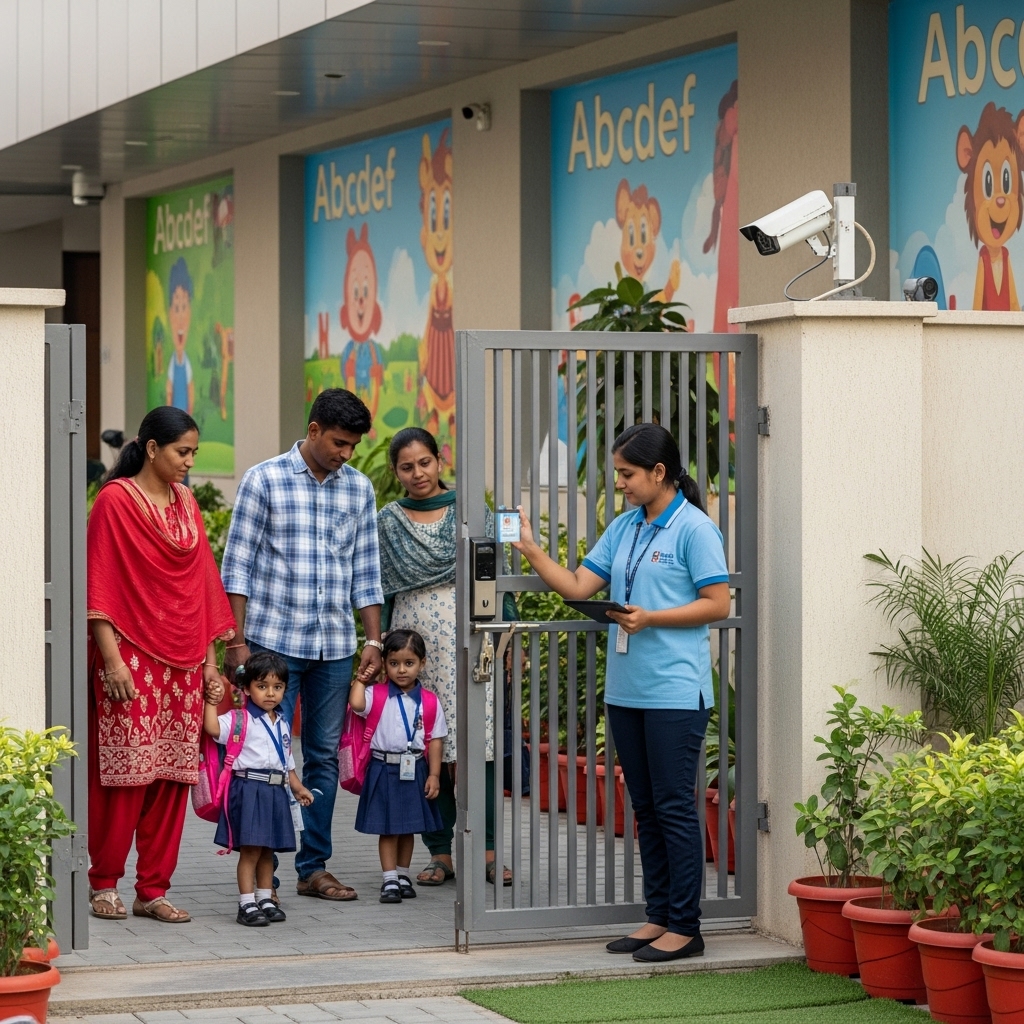
- Security arrangements
First Step offers preschool programs for different age groups as well as a daycare program for children from 6 months to 10 years, with daycare schedules ranging from 3 to 9 hours.
10. Maintain the Same Routine at Home
The preschool transition becomes easier when children have a stable routine outside school as well.
Try to maintain consistent:
- Sleeping times
- Meal times
- Morning routines
- Screen-time boundaries
- Family time
- Bedtime routines
Adequate sleep and predictable routines can help children feel more emotionally prepared for the day.
When Should Parents Seek Additional Support?
Some anxiety during the first days or weeks of preschool can be completely normal. However, if your child’s anxiety remains intense for a prolonged period or significantly affects eating, sleeping, daily activities, or their ability to participate in school, talk to your child’s pediatrician or a qualified child-development professional.
The important thing is to observe your child’s overall behaviour and provide support without creating additional fear around school.
How First Step Supports Your Child’s Early Learning Journey
Choosing the right preschool can make the transition more comfortable for both children and parents.
Discover First Step provides early-years programs including Play Group, Pre-Nursery, Nursery, LKG, UKG, Class 1, Class 2, and Daycare. Its learning environment includes features such as parent-teacher interaction, a Montessori lab, physical activity spaces, nutritious food, and live CCTV streaming.
The aim is to provide children with opportunities to learn, explore, develop social skills, and become increasingly independent in a supportive environment.
Final Thoughts
Separation anxiety does not mean your child is not ready for preschool. In many cases, it simply means that your child needs time, reassurance, and consistency while adapting to a new experience.
Prepare your child before the first day, establish a predictable routine, keep goodbyes short and positive, and give them plenty of encouragement.
Most importantly, remember that confidence develops gradually.