15 Fun Learning Activities for Preschoolers at Home
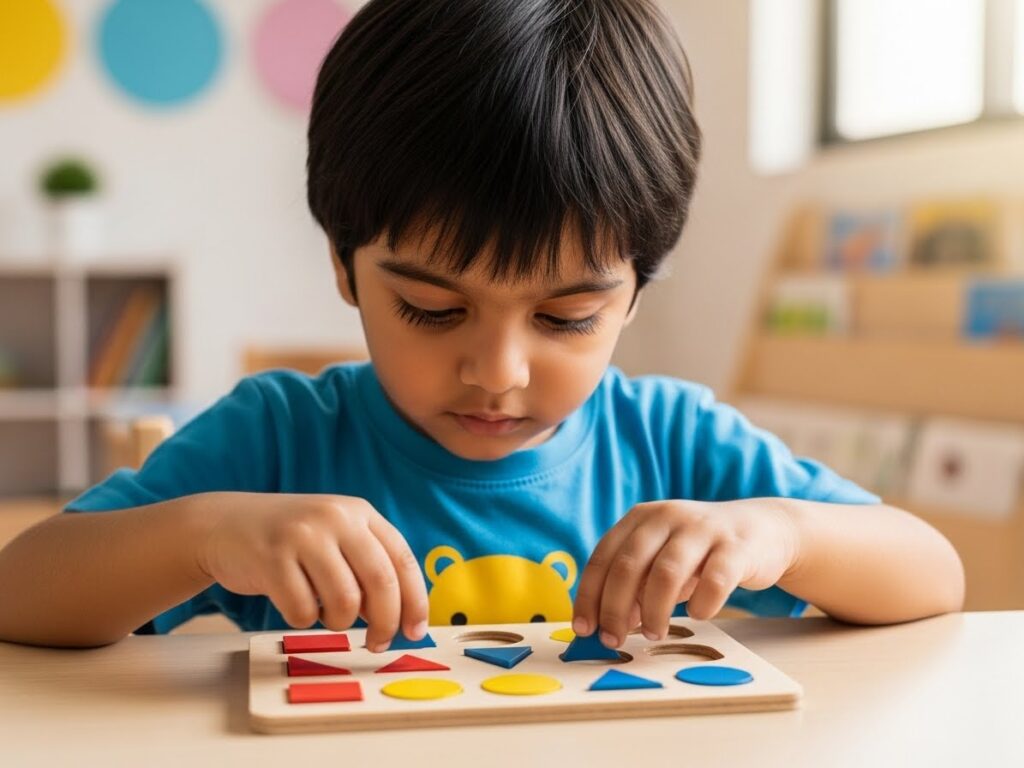
Preschool years are an exciting time when children learn through curiosity, play, exploration, and everyday experiences. Parents can support this natural learning process at home with simple activities that are both educational and enjoyable.
You don’t need expensive toys or complicated lesson plans. With everyday household items and a little creativity, you can introduce your child to numbers, letters, colors, shapes, language, problem-solving, and important social skills.
In this guide, we explore 15 fun learning activities for preschoolers that parents can easily try at home.
Why Are Learning Activities Important for Preschoolers?
Preschool children learn best when they are actively involved in what they are doing. Age-appropriate activities can help develop cognitive, language, physical, social, and emotional skills.
Regular learning activities for preschoolers can help children:
- Improve concentration and attention
- Develop early reading and writing skills
- Recognize numbers, letters, colors, and shapes
- Strengthen fine and gross motor skills
- Build creativity and imagination
- Develop problem-solving abilities
- Improve communication and vocabulary
- Learn how to follow instructions
- Become more confident and independent
The key is to make learning feel like play rather than a formal classroom lesson.
15 Fun Learning Activities for Preschoolers
1. Color Sorting Game
Collect objects around the house in different colors, such as building blocks, pencils, toys, or bottle caps.
Ask your child to sort the objects into groups according to their colors.
For example:
- Red objects in one group
- Blue objects in another
- Yellow objects in another
This simple game helps children recognize colors while developing their sorting and classification skills.
2. Alphabet Treasure Hunt
Turn alphabet learning into an exciting treasure hunt.
Choose a letter, such as A, and ask your child to find objects around the house that begin with that sound or letter. For example, they might find an apple, an action figure, or an art book.
As children become more comfortable, introduce different letters.
This activity can support early phonics, vocabulary, observation, and letter recognition.
3. Counting Everyday Objects
You can teach basic counting without using worksheets.
Ask your child to count:
- Toys
- Spoons
- Books
- Fruits
- Building blocks
- Socks
Start with small numbers and gradually increase the challenge.
You can also ask questions such as, “We have five apples. If we eat one, how many are left?”
This introduces children to basic mathematical thinking in a practical way.
4. Shape Hunt Around the House
Teach children about shapes by looking for them in their surroundings.
Ask your child to find examples of:
- Circles
- Squares
- Rectangles
- Triangles
A clock may look like a circle, a window may look like a rectangle, and a slice of some foods may resemble a triangle.
This activity encourages children to connect what they learn with the real world.
5. Storytelling With Picture Cards
Create simple picture cards using paper and crayons, or use pictures from children’s books.
Give your child three or four pictures and ask them to create a story connecting them.
Don’t worry about whether the story is grammatically perfect. Encourage your child to express ideas and use new words.
Storytelling can support vocabulary, communication, creativity, listening, and imagination.
6. DIY Playdough Activities
Playdough is a great way to combine creativity with learning.
Ask your child to make:
- Letters
- Numbers
- Shapes
- Animals
- Fruits
- Simple objects
Making different shapes with playdough can also strengthen the small muscles in children’s hands, which are important for activities such as drawing and writing.
7. Nature Collection Activity
Take your child outside and collect safe natural items such as leaves, small sticks, or fallen flowers.
Once you’re back home, encourage your child to sort them by:
- Size
- Color
- Shape
- Texture
You can also talk about where each item came from.
This activity combines observation, vocabulary, early science concepts, and sensory exploration.
8. Simple Kitchen Math
The kitchen can become a fun learning space.
While preparing food, ask your child to help count ingredients, compare sizes, identify colors, or sort foods.
For example:
“Can you give me three apples?”
“Which bowl has more pieces?”
“How many bananas do we have?”
These everyday questions introduce basic mathematical concepts in a meaningful context.
9. Music and Movement Game
Play a children’s song and encourage your child to move along with the rhythm.
You can introduce simple instructions such as:
- Clap your hands
- Jump twice
- Turn around
- Touch your toes
- Walk slowly
- Freeze when the music stops
Music and movement can support coordination, listening, rhythm, body awareness, and following instructions.
10. DIY Memory Game
Place several familiar objects on a table. Give your child a few moments to look at them.
Then ask them to close their eyes while you remove one object.
Ask:
“What is missing?”
Start with three or four objects and gradually increase the number.
This is a simple way to encourage observation, memory, concentration, and recall.
11. Letter and Number Tracing
Write large letters and numbers on paper and let your child trace them with a finger, crayon, or pencil.
You can make this more interesting by using:
- Sand
- Flour
- Rice
- Playdough
These activities give children opportunities to practice letter and number formation while developing hand control.
12. Sorting Laundry
Even everyday household chores can become educational activities.
Give your child a small selection of clean laundry and ask them to sort items by:
- Color
- Size
- Type
- Family member
For example, they can create separate groups for socks, T-shirts, and towels.
This teaches classification while encouraging children to participate in simple household responsibilities.
13. DIY Puzzle Challenge
Create a simple puzzle using a drawing.
Draw a picture on paper, cut it into a few large pieces, and mix them up.
Ask your child to put the pieces back together.
As children become more confident, increase the number of pieces.
Puzzles encourage visual thinking, concentration, problem-solving, and hand-eye coordination.
14. Indoor Obstacle Course
Create a safe mini obstacle course using cushions, pillows, soft toys, and other child-safe objects.
You could ask your child to:
- Walk around a cushion
- Crawl under a table
- Jump over a soft object
- Balance along a safe line
Always make sure the area is safe and supervised.
Physical learning activities for preschoolers can support balance, coordination, movement, and confidence.
15. “What Do You See?” Observation Game
Take your child to a window, balcony, garden, or another safe observation area.
Ask open-ended questions such as:
- What do you see?
- What colors can you find?
- How many birds can you see?
- What sounds can you hear?
- Is the weather sunny or cloudy?
Instead of giving your child all the answers, encourage them to observe and explain what they notice.
This can help develop language, curiosity, observation, and early scientific thinking.
How Parents Can Make Learning More Enjoyable
The goal of home learning is not to turn your house into a classroom. Preschool children need opportunities to explore, play, make mistakes, and discover things independently.
Here are a few tips for parents:
Follow Your Child’s Interests
If your child loves animals, use animals to introduce counting, colors, storytelling, and vocabulary.
Keep Activities Short
Preschoolers may have limited attention spans. A short, engaging activity is often more effective than a long session.
Ask Open-Ended Questions
Instead of simply asking questions with one correct answer, try:
“What do you think will happen?”
“Why do you think that?”
“Can you make another one?”
These questions encourage children to think and express themselves.
Praise Effort
Focus on the process rather than perfection. Encourage your child’s effort, creativity, and willingness to try something new.
Let Learning Happen Through Play
Children don’t always need worksheets to learn. Building blocks, drawing, storytelling, music, cooking, and outdoor exploration can all become valuable learning experiences.
Learning Through Play With Discover First Step
At Discover First Step, early learning is about creating meaningful experiences that encourage children to explore, interact, and develop essential skills in an engaging environment.
Parents can also continue this approach at home by turning everyday moments into opportunities for learning. Whether it’s counting toys, reading a story, exploring nature, or creating art, small activities can contribute to a child’s overall development.
The most important thing is to give children the freedom to be curious and enjoy the process of discovering something new.
Final Thoughts
Learning doesn’t have to stop when preschool ends for the day. Your home can become a place where children explore numbers, letters, language, creativity, movement, and problem-solving through simple activities.
Try these 15 learning activities for preschoolers and observe which ones your child enjoys most. You can then adapt the activities according to their interests, age, and developmental stage.
With patience, encouragement, and plenty of opportunities to play, everyday experiences can become meaningful learning moments.
Discover First Step believes that every child learns differently, and creating positive early experiences can help build a strong foundation for future learning.