Enrichment Programs

Rhythm & Blues –

Music, Dance, Drama & Movement

Music, Dance & Drama

Students in the DFS School take time to educate their bodies and minds in Dance and Drama. They improve coordination, balance, strength and flexibility through Dance. Students also explore storytelling and self-expression in Drama. A balanced life is a hallmark of a DFS curriculum, and these disciplines help DFS School students with their focus and self-confidence in the classroom. They explore storytelling through dance in their “Music and Movement” curriculum. These efforts promote self-control and resiliency in all areas of School life.

DFS School music program introduces musical concepts and skills in a fun, engaging environment. Children are frequently exposed to music—in the classroom, at special events, and in formal music group settings.

We encourage group singing and rhythmic movement through activities like song-games and dance. Classroom dance helps promote experimentation with rhythmic movements such as skipping, tiptoeing, galloping, leaping, and freezing.

Music is embedded into weekly lessons and integrated with celebrations and special events. Children learn essential cooperation skills by learning to dance and sing songs during seasonal festivities.

Children’s singing range increases gradually and their rhythmic ability on instruments becomes more controlled. When playing in groups, children are encouraged to celebrate their growing song repertoire by choosing songs for the group to play.

The music program in School weaves together four “pillars” of music: singing, dancing, playing, and inquiry.
Movement

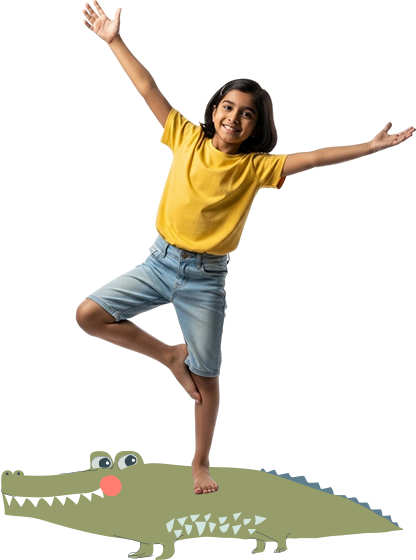
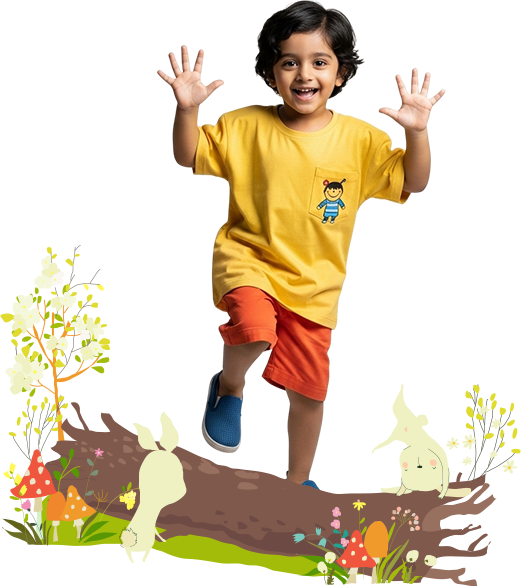
The creative movement class allows children to integrate their mind and body. It facilitates children’s creativity, imagination, and confidence; develops their fine and gross motor skills; builds impulse control; and fosters self-concept and self-esteem.

Movement classes allow children to experience themselves as individual dancers and as members of a group. In all formats, dancers use their imagination to express themselves and their understanding of the world.

The purpose of Movement classes is to facilitate creativity, imagination, risk-taking, and confidence through the exploration of movement concepts: space, time, and energy. Through movement, students integrate the brain and body, developing balance, coordination, and spatial awareness.

In addition to movement concepts and awareness of body in space, our movement classes allow children to experience themselves as individual dancers, as partners, and as members of a group. In all of these formats, dancers use their imagination to express themselves and their understanding of the world.

Yoga

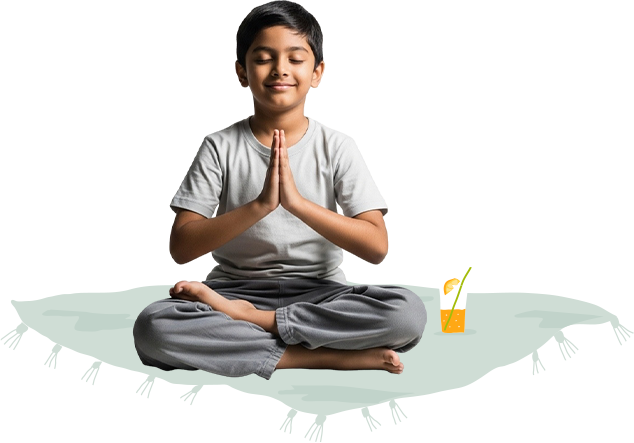
Junior Yoga is based on the traditional practise of yoga that is aimed at creating a balance of the body and the mind. The class aims to introduce our little ones to yoga in a fun way.

A typical class will begin with light stretching, and basic breathing exercises. This will be followed by deeper stretches, that are introduced to the child through dance, music, stories and games.

DFS students challenge themselves mentally and physically in Yoga/Mindfulness.

Physical Education

At DFS we believe that participating in sports can be greatly rewarding and beneficial for the mind, body and soul.

Gym games and activities are often the highlight of every day. An integral component of our focus on the whole child, our physical education program is designed to promote social and emotional skills, teamwork, and problem-solving.
Each season offers a new theme with new skills. Class activities are constantly changing according to new skills of focus. Our educators provide opportunities for children to learn a variety of skills in conjunction with our overarching curriculum.

The students participate in engaging games like “animal walk”, “trampoline”, “wall climbing” or “Musical Hula Hoops.” Children practice and develop gross motor skills like running, skipping, and galloping through a variety of interactive activities and games. Our facilities include gym equipment like scooters, parachutes, tunnels, and balance beams and always offer children something new and engaging.

STEAM

*STEAM stands for Science, Technology, Engineering, Arts and Mathematics.

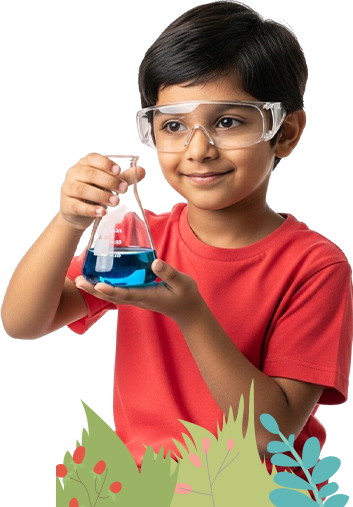
The STEAM program is an essential part of the DFS School curriculum, creating cross-curricular opportunities at all grade levels. While students learn math in their classrooms, science and engineering in the science experiments, art in the studios, and technology in the technology classes, these subject areas coalesce into STEAM. Children build, tinker, and craft as they consider and solve problems big and small. Students are challenged to find what inspires them to create and innovate, and teachers are prepared to help them learn the content and skills necessary to make their ideas a reality.

Explorer Junior believes in making learning fun and meaningful for children, by allowing them to explore their interests & talents while nurturing their curiosity and creativity.

STEAM* inter-disciplinary learning pedagogy, By re-engineering how classes are traditionally conducted, we prioritise the process of learning over the outcome; reframe failure and mistakes, allowing children to explore and learn through hands-on experiences.

ART

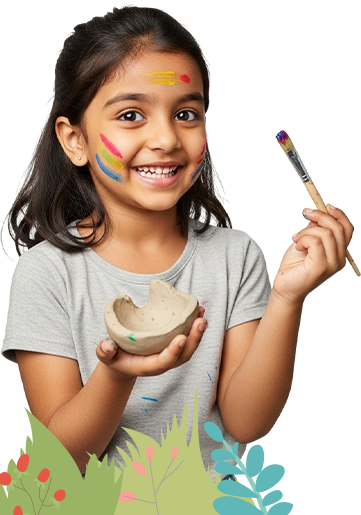
Art at DFS is rooted in rich explorations of materials. Painting, clay, and collage are the core materials of the art program because they offer so many expressive possibilities for children as they grow and develop. Art in the school program is rooted in creative discovery and freedom of expression. Children in any given classroom may be in different stages of development with each material. Some children may be exploring for the whole year, while others may be designing or creating representational works. There is no timeline for artistic development and there is no need to hurry it along. In fact, the longer the child can actively explore with materials, the richer the visual vocabulary he or she will have to draw upon when he or she is ready to represent.


In each lesson, the teacher presents a “motivation”—a question designed to spark thinking about a certain material. For example, she might ask, “What is one kind of line you can make with your brush?” Children are invited to share their ideas and to learn from one another.

  • Painting: Children learn set-up and clean-up for painting. As they work, children learn that colors can be mixed on the paper and on the tray as they explore a variety of marks, lines, and shapes on paper. Each child explores the paint in his or her own way and at his or her own pace.
  • Clay: Children explore the clay by poking, pounding, pinching, and rolling, and learn that they can make all kinds of marks, and shapes, forms with this soft, strong, and malleable material. Children work on small boards individually as well as on large boards in pairs.
  • Collage: Through the medium of collage, children explore the tactile and visual properties of materials. As they distinguish the properties of materials by size, color, shape, and texture, children begin making careful decisions about placement and arrangement of parts to the whole. In the beginning of the year, children explored the flat and three-dimensional properties of paper.

Discover Your Full Potential

Discover a world of fun, learning, and care! Schedule a visit, talk to our team, or ask anything. We’re excited to meet you and your little one.